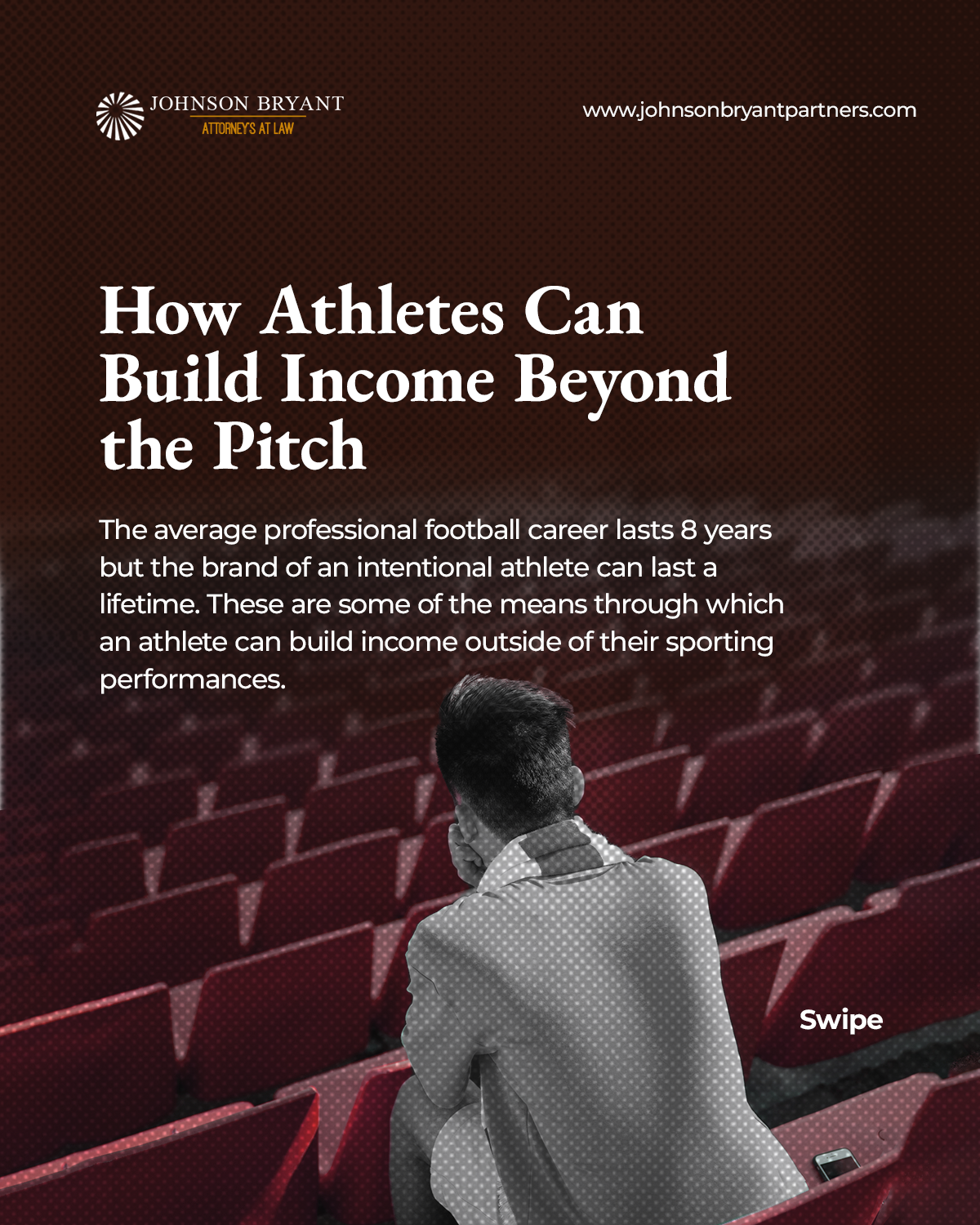
The average professional football career lasts about eight years. The earning window is narrow, the body wears down, and contracts eventually stop coming. But the biggest names in Nigerian sport have demonstrated something worth paying attention to: the athletes who build lasting wealth are those who understood early that their value extends far beyond what they do on the pitch.
This shift is gaining serious policy backing. At the 2026 World IP Day Summit in Abuja, themed "IP and Sports: Ready, Set, Innovate," WIPO and Nigerian stakeholders gathered to address one of the most underused opportunities in African sport: the commercial power of Intellectual Property. With Nigeria's National Intellectual Property Policy and Strategy (NIPPS) gaining momentum, the conditions are forming for Nigerian athletes to build structured, lasting income from their personal brand.
Here is what that looks like in practice.
YOUR NAME AND LIKENESS ARE A BUSINESS ASSET
Every time a company uses your face, your name, your voice, or your signature to sell a product, they are using your image rights. In more developed sports markets, this is already a major income stream. European footballers routinely negotiate image rights arrangements separately from their club contracts, creating a second income source they control entirely.
In Nigeria, this remains the exception. Many athletes sign over broad rights without realising it, or without any structure in place to monetise those rights independently. A properly negotiated image rights agreement can cover endorsements, advertising campaigns, digital content, and event appearances. The commercial use of your likeness belongs to you. Protecting it with a clear legal framework is what turns it into income.
MERCHANDISE AND BRANDING: REGISTER BEFORE SOMEONE ELSE DOES
If fans are buying jerseys with your name or number, or if you are building a public persona around a nickname or logo, those elements can and should be trademarked. A registered trademark gives you the exclusive right to use that name or mark commercially, and to stop others from profiting off it without your permission.
Counterfeit merchandise is a real problem in Nigerian markets. Without a registered trademark, an athlete has very limited legal recourse. With one, you have a clear enforcement tool and, more importantly, a clean asset to license to authorised manufacturers and retailers.
GAMING AND DIGITAL MEDIA: NEW PLATFORMS, REAL MONEY
Sports gaming is a growing global industry, and player likenesses are at the centre of it. The Abuja Summit specifically highlighted the emerging rights contest around sports performance data, and who owns the information generated from every match, training session, and biometric reading.
For athletes, this raises two practical points. First, licensing your likeness to gaming companies can be a meaningful revenue stream, but only if your image rights are clearly owned and not buried in a club agreement signed years ago. Second, the data your performance generates has commercial value. You should know what you have agreed to regarding its collection and use.
CONTENT YOU CREATE IS YOURS
More athletes are building their own platforms, from training footage to lifestyle content to behind-the-scenes coverage. That content is protected by copyright from the moment it is created, and it belongs to the creator.
Building a content presence now means building an archive of owned media that can generate income through platforms, brand partnerships, and licensing well after the playing career ends. The broadcast industry and major sponsors are paying increasing attention to athletes who have already built that audience independently.
THE WINDOW IS OPEN
The legal infrastructure is catching up with the opportunity. NIPPS, Nigeria's ongoing IP reforms, and growing international attention on African sport are all moving in the same direction.
The athletes who benefit will be those who begin treating their name and likeness as a business asset, not just a by-product of their performance. That means registering what can be registered, negotiating what can be negotiated, and reading what you sign before you sign it.
If you want to understand which rights apply to your situation and what they could be worth commercially, speak to a lawyer with experience in both the law and the industry.