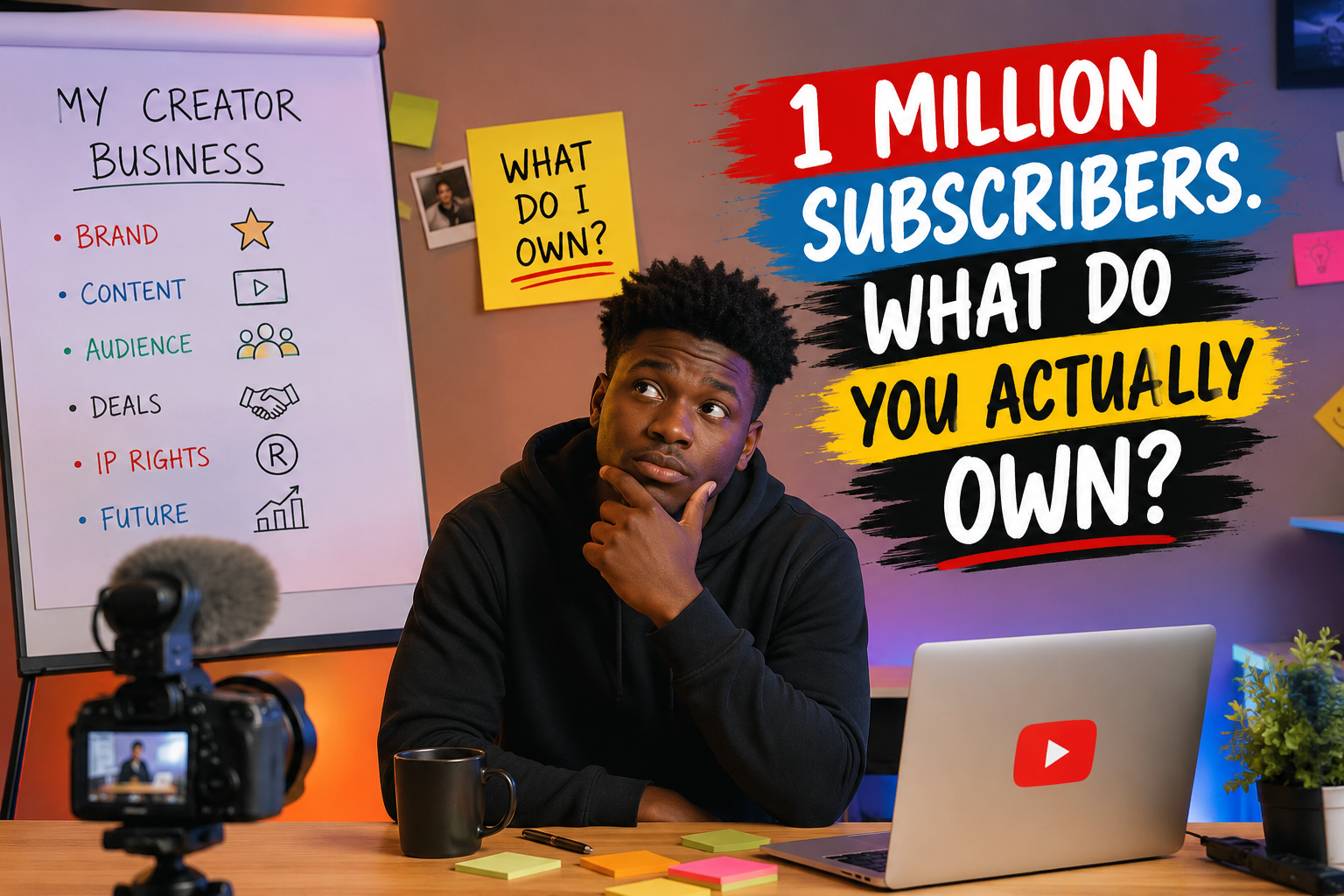
For creators, reaching one million subscribers is a significant commercial milestone. It can create opportunities for advertising, brand partnerships, licensing, investment and other forms of monetisation.
However, subscriber numbers are only one part of the value of a creator's business. Behind a successful YouTube channel may be a portfolio of intellectual property, contractual rights, commercial relationships and business assets. Understanding who owns those assets, and how they can be used, is increasingly important as creators build businesses around their platforms.
For Nigerian creators in particular, the growth of the digital creator economy creates an opportunity to approach content creation not only as a media activity, but also as an intellectual property and commercial business.
The YouTube Channel Is Only One Part of the Business.
A creator's business may include significantly more than the channel itself. Depending on the nature of the creator's activities, relevant assets may include:
1. Video and audio content
2. Copyright in scripts and other written materials
3. Creator names and brands
4. Logos and other visual identifiers
5. Characters and recurring concepts
6. Original programmes and formats
7. Podcasts and other digital content
8. Books and other written works
9. Merchandise
10. Websites and domain names
11. Social media accounts
12. Brand and sponsorship agreements
13. Licensing arrangements
14. Production companies and other business entities
These assets may not all have the same owner. Some may belong to the creator personally, some to a company, and others may involve rights held jointly with collaborators or contractors. Establishing ownership early can prevent significant problems when the business expands or a commercial opportunity arises.
Copyright Ownership in Creator Content
Creators frequently work with videographers, editors, writers, producers, designers and other creative professionals. The fact that a creator commissioned or paid for a piece of work does not necessarily mean that all intellectual property rights have been dealt with as the creator expects. The applicable copyright rules and the terms of the parties' agreement are important in determining ownership and permitted use. Written agreements should therefore address issues such as ownership, permitted use, delivery of source materials, confidentiality and what happens when the relationship ends.
This is particularly important for a creator with a substantial content catalogue. An unclear ownership position affecting one video may become significantly more important when multiplied across hundreds of pieces of content.
Protection of Creator Names and Brands
A creator's name can become a valuable commercial asset when audiences associate it with a particular type of content, product or service. As a creator expands into merchandise, events, licensing or other commercial activities, trademark protection may become relevant. The appropriate protection will depend on the name, branding, goods or services involved and the jurisdictions in which the creator intends to operate. Creators should therefore consider their brand as an intellectual property asset rather than simply a social media identity.
Characters, Formats and Other Original Content
For creators producing comedy, entertainment, educational or narrative content, the most commercially valuable asset may not always be an individual video. A recurring character, programme concept, format or other original creation may have potential applications beyond the original YouTube channel. Depending on the nature of the rights involved, this could include licensing, merchandising, publishing, television, film or other adaptations. The ability to exploit these opportunities depends in part on having a clear understanding of the underlying intellectual property and who owns the relevant rights.
Creating an original character or format is therefore only the beginning. The creator should also consider how that intellectual property is protected, documented, and commercially exploited.
Brand Partnerships and Commercial Agreements
Brand partnerships can become a significant source of revenue for successful creators. They can also create rights and obligations that affect the creator's broader business. A commercial agreement may address the brand's rights to use the creator's name, image or content, the duration and territory of those rights, exclusivity, competing brands, approval rights, deliverables, payment and termination.
These provisions can have consequences beyond the individual campaign. For example, a broad exclusivity provision could restrict the creator from working with other businesses in the same sector. Similarly, extensive rights granted to a brand to use the creator's content or likeness could affect the creator's ability to commercialise that material elsewhere. Creators should therefore assess commercial agreements not only by the value of the immediate payment, but also by the rights they are granting and the restrictions they are accepting.
Relationships with Employees, Contractors and Collaborators
As a creator's business grows, the number of people contributing to the business will often increase.
Editors, producers, writers, videographers, designers, managers and other contractors may all contribute to the development of valuable content and intellectual property. Clear agreements can establish ownership of work created for the business, confidentiality obligations, permitted use of materials and the treatment of intellectual property when a relationship ends.
This is particularly important where a creator's business depends heavily on a small number of individuals. A creator should not assume that the departure of a team member automatically resolves questions concerning ownership or future use of the material they created.
Co-Creators and Jointly Developed Channels
Jointly operated channels create another layer of ownership considerations. Friends, siblings, couples and other collaborators may establish channels or content businesses together without formally documenting their respective interests. This may work while the relationship remains straightforward, but difficulties can arise when one person wants to leave, the parties' contributions change or the business begins generating significant revenue.
A written agreement can address matters such as ownership, revenue sharing, decision-making, intellectual property, responsibilities and what happens if a party leaves the business. The earlier these matters are addressed, the easier it is to prevent disagreements from becoming disputes over valuable intellectual property.
Corporate and Business Structure
As a creator's activities become more substantial, consideration should also be given to the relationship between the creator and the business through which those activities are conducted. A creator may operate personally, through a company, or through a combination of personal and corporate arrangements. The appropriate structure will depend on the creator's circumstances and commercial objectives. What matters is that the ownership of intellectual property, contractual relationships and revenue streams is understood and deliberately structured. This becomes particularly important when a creator begins employing people, entering significant commercial agreements, bringing in investors or developing additional businesses around their content.
Preparing for Investment, Licensing and Other Transactions
Creators do not only need to have intentions to sell their businesses for ownership and documentation to become important. A creator may receive an opportunity to license a character, develop a television series, enter a joint venture, bring in an investor, launch a product or partner with a larger media company. In each case, the parties are likely to want to understand what assets are being contributed, who owns them and whether the relevant rights can be granted or transferred.
A business with clear ownership records, well-documented contracts and organised intellectual property is generally better positioned to respond to these opportunities. The same preparation that supports a potential acquisition can therefore support ordinary business growth.
Building Value Beyond the Platform
YouTube provides the platform through which the audience is developed. It does not necessarily define the full value of the underlying business. A creator may ultimately build value through intellectual property, commercial relationships, licensing, publishing, merchandise, production, brand partnerships and other activities. The commercial objective should therefore not be limited to growing an audience. Creators should also consider how the content, brands and intellectual property generated through that audience can be protected, structured and commercialised.
Conclusion
One million subscribers is a significant audience, but subscriber numbers do not by themselves define the value of a creator's business. The more important questions are:
"Who owns the content?"
"Who owns the brand and other intellectual property?"
"Are relationships with collaborators and contractors properly documented?"
"What rights have been granted to commercial partners?"
"Is the business appropriately structured?"
"Can the underlying assets be licensed, commercialised, invested in or transferred if an opportunity arises?"
For Nigerian creators, these questions are becoming increasingly relevant as digital platforms develop into significant channels for building media businesses. Creators who address ownership, intellectual property and commercial structures as their businesses grow are better positioned to protect what they have built and take advantage of opportunities beyond the platform itself.
Johnson Bryant advises creators and entertainment businesses on intellectual property, commercial agreements and business structures, including the protection and commercialisation of creative assets.